October is the month the Lower Deschutes stops being one river and becomes several at once. Water temperatures slide into the low 50s, the float traffic of summer is gone, the summer steelhead are spread through the canyon, and four distinct insect events overlap on the same water within a few weeks of each other. Every October somebody in Maupin asks which of them is "the" hatch. This season we kept notes and tried to answer properly.
The fishing below covers the water from Trout Creek down to Macks Canyon between September 22 and October 7. Conditions were close to normal: flows from Pelton steady in the low 4,000s, a dry first week, and two cool, overcast spells that did the Baetis a great deal of good.
How we ranked them
A ranking is only as honest as its criteria, so we set ours before the first day on the water rather than after. Each hatch was scored on four things: how consistently it fished from one day to the next, how many fish it moved, the average size of those fish, and how many hours of a given day it actually fished. A hatch that produced one memorable evening and then vanished for a week scores lower than a modest one that showed up every afternoon.
Timing for each insect follows our month-by-month Deschutes hatch chart, which is where the start and end dates in this piece come from. What the chart cannot tell you is how those overlapping windows compare against each other on the same afternoon. That is what this season's notes are for.
1. October Caddis (Dicosmoecus gilvipes)
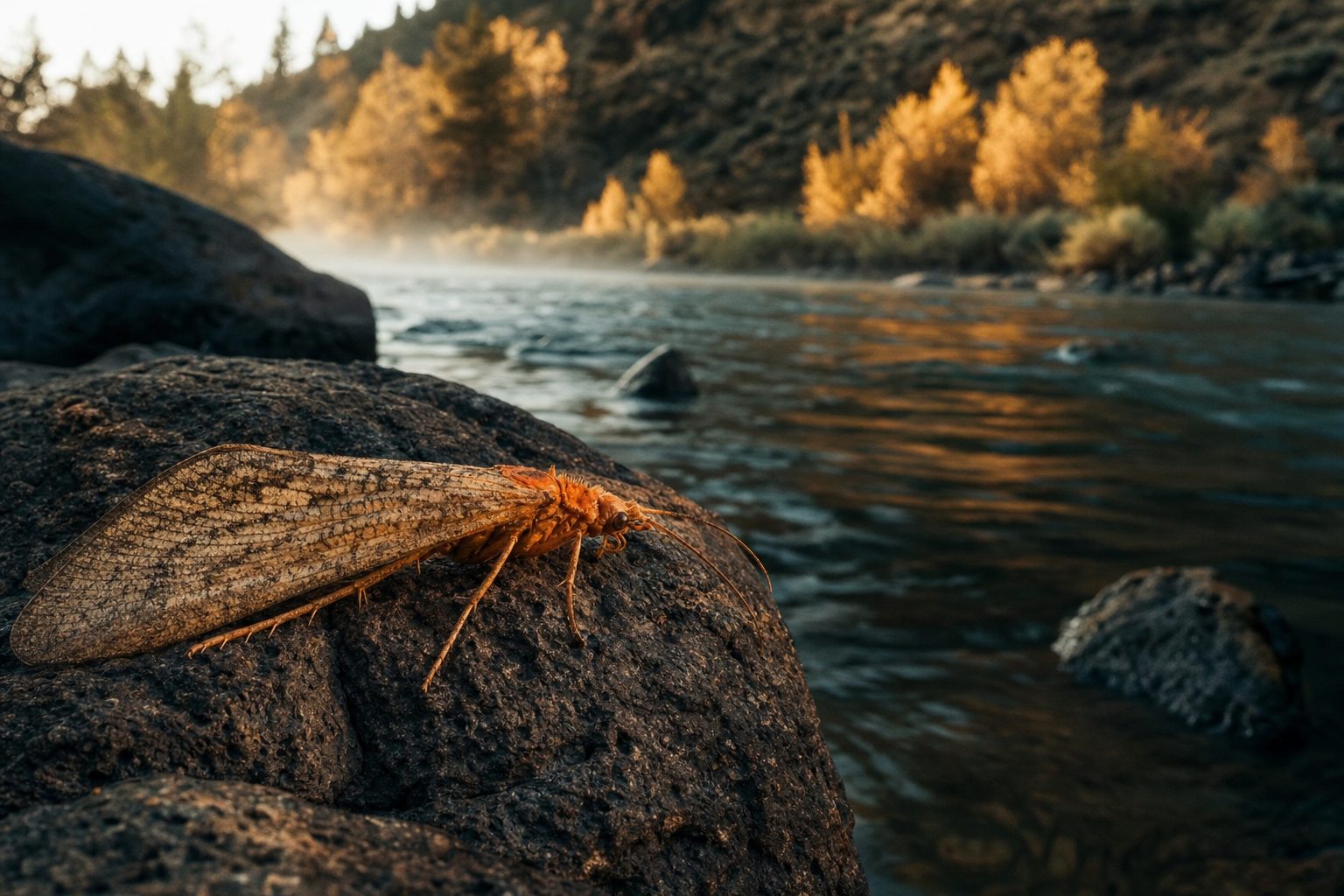
The October Caddis finished first, and not narrowly. It was the only hatch that fished in some form for most of the daylight hours: the pupa swung through the bottom third of a run from late morning, and the big orange adults on the surface in the last 30 minutes of light. It also moved the largest trout of the season. Redbands in the 16 to 18 inch range came to a size 8 orange soft hackle on a slow swing far more often than to anything else we fished.
The caveat is that most of that production came subsurface. Anglers who wait for the adult and fish only dries will see a much shorter window and a much weaker version of this hatch. Swing the pupa all afternoon, then switch to the dry when the light leaves the canyon walls.
2. Fall Blue Wing Olive (Baetis)
The fall Baetis came in second, and on the two overcast stretches it was the best fishing of the month. Size 18 to 20 olive duns came off between roughly 1:30 and 4:00 p.m., and fish in the slow inside seams fed on them steadily. An emerger in the film outfished the high dun by a clear margin, the same pattern we see in spring.
It ranked below the caddis on two criteria. On bright, still days the hatch was thin or absent, which hurt its consistency score, and the fish it moved averaged a few inches smaller. When the sky stays grey, though, there is no better dry fly fishing on the river in October.
3. Mahogany Dun (Paraleptophlebia)
The Mahogany Dun is the quiet member of the group. Size 14 to 16, reddish brown, emerging in scattered numbers through the early afternoon and often overlapping the start of the Baetis. It rarely produced a full rise, but it did bring individual fish up in the softer edges, and a size 16 parachute in the right color solved more than one refusal problem. It scored well on fish size and poorly on everything else.
Rankings like this one tend to get read for the order rather than for the reasoning, which is a mistake whether the subject is mayflies or anything else. The Toronto Star's guide to the best payout online casinos in Canada, for instance, only becomes useful once you understand why the sites that came out on top did so and which measures were used to place them. The same is true here. If you only fish at dusk, the Mahogany Dun is irrelevant to you and the October Caddis adult is the whole story. If you fish the middle of the day, the order of the bottom two changes.
4. Late tricos
The trico spinner fall was still running at dawn when the season began, but it was fading fast. By the first week of October the mornings were too cold for a dense fall and the fish had largely stopped looking for size 22 spinners. Early in the period it was worth an hour on the flats below Maupin. By the end it was not worth the early start. Tricos remain a September hatch, and our ranking reflects that.
The steelhead question
Summer steelhead are not a hatch and were not scored, but they shape every October day on this river. The swung-fly window runs from September through the end of October, and many anglers split the day: steelhead water at first and last light, trout hatches in between. If that is your plan, read the most recent Deschutes fishing reports by reach before you choose where to start, because fish distribution through the canyon changes from week to week. Make sure you also carry a Combined Angling Tag and check the current Oregon Department of Fish and Wildlife fishing regulations, since retention rules and section closures on the Deschutes change from year to year.
Planning an October trip
October is a good month to come to the Deschutes on short notice. Lodging pressure drops after Labor Day, the BLM campgrounds along the access road have space midweek, and Maupin works as a base for both the trout water and the steelhead water. Our guide to staying near the Lower Deschutes covers the trade-offs between town, camp, and the longer drive from Madras.
If you have one week, the ranking suggests a simple plan: swing caddis pupae from late morning, keep a box of size 18 Baetis emergers ready for any afternoon that clouds over, and stay on the water until dark. The order may be different next year. The criteria will not.