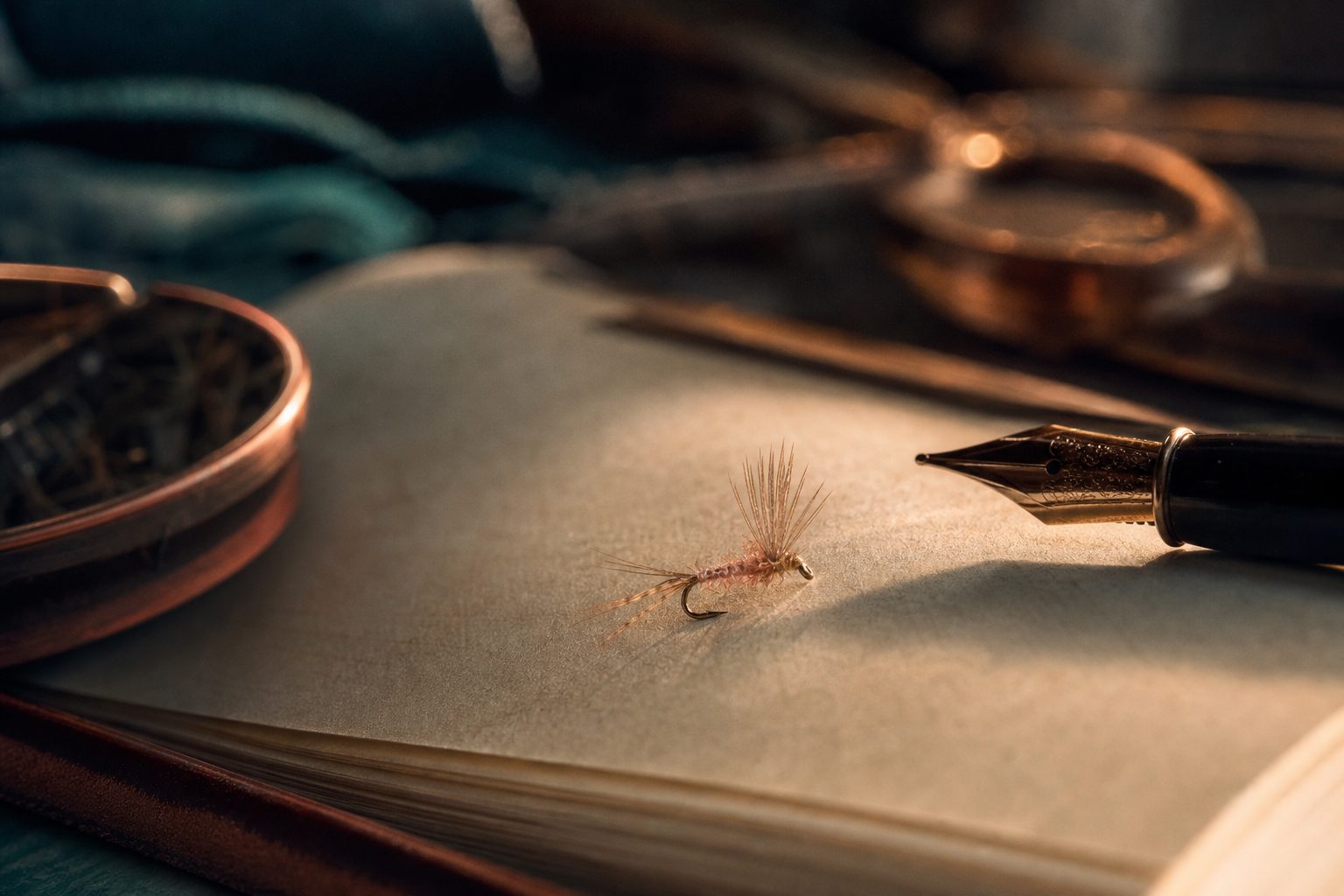
The Pink Sparkle Dun is a Pale Morning Dun emerger pattern attributed to Craig Mathews of Blue Ribbon Flies in West Yellowstone, where it was developed for the slick, technical PMD water of the Henry's Fork and the Madison. It works equally well on the Deschutes during the May through July PMD window and has become the default emerger pattern in our box for that hatch.
Why this pattern works
The fly imitates a PMD dun caught at the moment of emergence, when the wings have lifted free of the shuck but the body is still anchored at the surface film. Fish key on this stage because the insect is helpless - it cannot fly off and it cannot dive. The Pink Sparkle Dun uses a trailing antron shuck to suggest the still-attached nymphal husk and a compact CDC or Z-lon wing to sit the fly low in the film. The pink body is a small deviation from a strictly imitative PMD tan or yellow - it suggests the more pinkish-cream cast of a freshly emerged PMD dun before it has cured in the air.
Recipe
Pink Sparkle Dun (PMD)
- Hook: Tiemco 100 or equivalent dry-fly hook, size 16-20
- Thread: Pale yellow or cream 8/0
- Shuck: Amber or rust Z-lon, sparse, twice the hook length
- Body: Pink or pale rose superfine dubbing, sparse
- Wing: Natural deer hair (comparadun style) or pale dun CDC
- Thorax: Same pink dubbing, slightly fuller
How to fish it
During an active PMD emergence, the Pink Sparkle Dun fishes best as the dropper in a two-fly rig with a standard PMD comparadun on point. Fish refuse the high-floating dun and take the lower-profile emerger when the hatch is at full swing. Dead drift, 5X tippet, and a downstream-and-across presentation to a feeding fish are the standard approach. A reach-cast or a brief stack-mend just upstream of the fish extends the drift and avoids drag in the seam.
During the back end of a hatch, when fish have grown wary and rises have slowed, the Pink Sparkle Dun fished alone on 6X is often more productive than any two-fly rig. The smaller profile and total absence of microdrag from a dropper combine to fool fish that have refused the same standard patterns earlier in the day.
When not to fish it
The Pink Sparkle Dun is a PMD pattern and works for PMDs. It is not a useful caddis fly. It is not a BWO substitute - BWO emergers should be tied in olive on smaller hooks. It is not a trico pattern - tricos are too small and the body cast is wrong. The fly is a precise tool for a specific hatch.
It is also not the best choice during a heavy emergence in flat, slick water if fish are gulping clusters from a spinner fall. Spent spinners ride in the film with their wings splayed flat - a spent-wing pattern, not an emerger, is the right call.
Variations we have tried
A few variations have earned their way into the box over the years. A version with the shuck shortened to one hook length sits higher in the film and works in faster water where the fly might otherwise sink. A version with a sparser, longer Z-lon shuck and a CDC wing sits even lower and is the right call on the slickest backwater seams. A version in pale cream with no pink at all is the choice during the late part of the hatch when the body color of the natural has shifted to a paler, more washed-out cast.
Where to read next
- Deschutes River Hatch Charts - when PMDs are on the water
- Current Fishing Reports - what is hatching right now